


For most Ferrari models, including newer ones like the Ferrari 488 GTB or hybrid variants, the official Genuine Maintenance plan recommends service every 20,000km or at least once per year — whichever comes first.
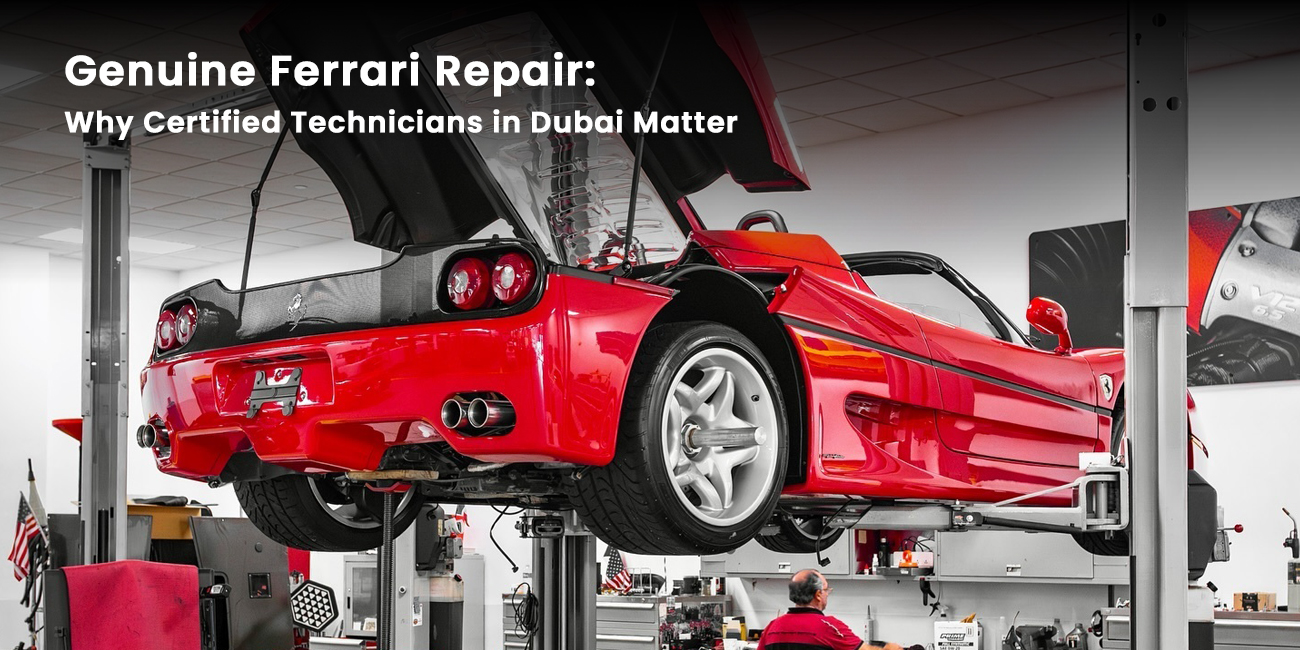
Genuine Ferrari Repair: Why Certified Technicians in Dubai Matter
09 Dec 2025
Table of Contents
- The Unrivaled Legacy of Ferrari: More Than Just a Car
- Defining Certified: What It Truly Means for Your Ferrari in Dubai
- Dubai’s Unique Environment: Specific Challenges for Your Ferrari
- The Indispensable Value of Certified Ferrari Technicians
- The Hidden Costs and Risks of Non‑Certified Ferrari Repair
- Comprehensive Services Offered by Certified Ferrari Centres in Dubai
- What to Expect from a Certified Ferrari Service Experience in Dubai
- Choosing the Right Certified Ferrari Repair Partner in Dubai
- Drive with Absolute Confidence: The Certified Ferrari Difference
- Conclusion: Your Ferrari Deserves the Best in Dubai
- FAQs
The Unrivaled Legacy of Ferrari: More Than Just a Car
Precision Engineering and Exhilarating Performance
Being an Ferrari does not just mean the driving experience, it's about the experience of a work made of Italian engineering. From the curvaceous curves that are sculpted on the Ferrari 488 GTB and the Ferrari SF90 Stradale to the sculpted curve Ferrari 488 GTB and Ferrari SF90 Stradale and the iconic sound of the Ferrari F12, these vehicles were created with the highest quality, power, and performance. The V-12 engine, the hybrid components, the latest suspension systems, with active suspensions such as those of the MagneRide System -- as well as carbon ceramic brakes require the expertise of experts that is far beyond the standard repair of a car.
The Emotional Investment of Ferrari Ownership in Dubai
There are many Dubai residents, have a Ferrari (perhaps an elegant Ferrari Portofino cruising along Jumeirah Lakes Towers or an erupting Ferrari Monza SP1 on city streets can be a sign of class as well as a lifestyle. They aren't just cars for everyday use. They are highly sought-after symbols. The emotional and financial investment makes maintenance more than simply maintenance's an investment in the future enjoyment, driving pleasure, and of course, prestige.
Why a Supercar Demands Super Specialists
The complicated nature of Ferrari engineering, including fuel injection systems, torque converters, and ECU codes, to hybrid systems and components of the high-performance drivetrain, requires those with extensive knowledge and experience to handle the equipment. The luxury vehicle, like a Ferrari, is not a vehicle that can be compared to normal sedans: incorrect repair, faulty maintenance of suspensions or transmissions, or incorrect diagnosis of the brake system could compromise the safety of drivers, their performance, and overall driving experience.
Defining Certified: What It Truly Means for Your Ferrari in Dubai
Beyond Basic Mechanics: The Rigorous World of Ferrari OEM Training
Certified doesn't just mean an experienced mechanic. For the case of a Ferrari certificate, it means that technicians have completed OEM instruction -- usually in Ferrari's training centers and have been qualified to manage complicated systems, hybrid parts, as well as advanced diagnosis. Only those certified by Ferrari technicians can be authorized to offer "Ferrari repair service" that can be counted on.
Master Technicians: Expertise Across All Ferrari Models and Systems
Master technicians certified by the FIA are certified across the entire range of Ferrari models ranging including modern hybrids such as SF90 Stradale or 296 GTB, to older Ferrari models as well as timeless V12-powered classics like the F12 or traditional Daytonas. Their experience covers the areas of engine diagnostics, transmission services, and diagnostics for brake systems, as well as electrical repair and servicing of hybrid systems, and even traditional restorations.
The Crucial Role of Factory Diagnostic Tools and Proprietary Software
Without diagnostic tools from the factory, as well as diagnostic equipment as well and the exclusive Ferrari software, identifying issues such as the ECU fuel injection, ignition timing, and hybrid battery systems, or sensors -- is an exercise in guesswork. The certified Ferrari service centers rely on maintenance procedures that are factory-scheduled as well as Ferrari diagnostic instruments to ensure precise, secure, and efficient repair.
What Certification Protects: Manufacturer Standards and Warranty Integrity
Utilizing approved Ferrari service centers as well as genuine parts, such as genuine OEM parts, carbon-ceramic brake pads, authentic brakes as well and correct air filters and the correct fluids ensures that the car complies with its maintenance schedule. It also safeguards warranty protection. In the case of the majority of Ferrari models, like those with the number 488 GTB or hybrid model, the warranty as well as the extended maintenance schedule are valid only when maintenance is completed by authorized technicians.
Dubai’s Unique Environment: Specific Challenges for Your Ferrari
Battling the Heat: Extreme Demands on Engine Cooling and Lubrication Systems
The scorching summers in Dubai -that can reach temperatures of 45°C - place severe stress on cooling systems, engines, and lubricants as well as transmission fluids. The result is excessive heat in the engine, breakdown of oil, and a decrease in the efficiency of fuel lubrication, as well as accelerated wear. The certified Ferrari technicians can monitor the level of coolant and change fluids frequently, and also ensure that the V12 or hybrid engine stays safe during these situations.
The Impact of Dust and Humidity: Air Filtration, Electronics, and Longevity
The humidity, dust storms, and sand may infiltrate air filters, block ventilation systems, and cause stress on electronic and hybrid parts, especially on a vehicle that is complete. In the absence of regular replacements for air filters and the proper sealing and examination of hybrid and electronic components, the performance and durability decrease. Regular maintenance carried out by qualified technicians guarantees the proper air filters, authentic components, and preventive maintenance.
Road Conditions and Driving Dynamics: Stress on Suspension and Brake Systems
While Dubai roads tend to be comfortable, the combination of speedy driving, turbulent patches, rapid turns, and the heavy braking that is a part of high-speed Ferrari driving puts massive pressure on brakes, suspension systems, and wheel alignment. Professionally trained technicians will ensure correct suspension repair, wheel alignment, and regular maintenance of the brake system (including Carbon Ceramic brake system diagnostics, as well as the replacement of brake pads) in order to ensure the safety and excitement of driving.
The Indispensable Value of Certified Ferrari Technicians
Guaranteeing Genuine Ferrari Parts and Authentic Replacements
Affiliated Ferrari service centers ensure the usage of original Ferrari components, genuine parts that are at least OEM components specifically designed for the model you have, regardless of whether it's a Ferrari Roma, LaFerrari, GTC4Lusso, or older Ferrari models. Genuine parts guarantee a perfect quality, fit, as well as reliability over the use of aftermarket replacement, which can reduce longevity or cause problems with compatibility.
Preserving Original Performance, Handling, and Driving Dynamics
The proper replacement and maintenance of the suspension system, as well as transmission (transmission maintenance, overhaul of the transmission, and inspection of the torque converter) and brake system, motor, and drivetrain to ensure the car keeps its performance and control, and is not only good enough for driving, it is faithful to the Ferrari design concept.
Advanced Diagnostics for Complex Ferrari Engineering
The certified technicians use the latest diagnostic tools and software that allow exact engine diagnostics, ECU codes reading, and hybrid system check-ups, fuel injection and timing inspections, repairs to the engine, sensor diagnostics, and electrical repair. In the absence of this, problems may not be identified correctly or remain undiscovered.
Adherence to Ferrari’s Precise Factory Maintenance Schedules
Ferrari's 7-year Genuine Maintenance (or older/extended maintenance schedules) demand regular maintenance every 20,000 km or yearly, using only manufacturer-approved parts and methods. This guarantees long-term reliability, efficiency, and warranty conformity.
Protecting Your Investment and Maximizing Resale Value
Maintaining an extensive service record that is backed by a certified Ferrari entry in the service center, which includes regular maintenance, genuine part repairs, transmission services the suspension, brakes and suspension and engine oil changes, as well as any repair work, keeps the value of your car and guarantees a higher value resale. A Ferrari that is maintained in accordance with the factory specifications is much more attractive on the market.
Comprehensive Expertise Across All Ferrari Systems
A Certified Ferrari workshop can handle all things -engine repairs and rebuilds of engines, Transmission issues, suspension repairs, electrical repairs, brake diagnosis of hybrid systems, body repair, paint protection (ceramic coating or paint protection film), and bodywork. Collision repair, detailed wheel alignment, and replacement of tires provide a holistic approach to automobile treatment.
The Hidden Costs and Risks of Non‑Certified Ferrari Repair
Compromised Performance, Unreliable Handling, and Safety Hazards
Utilizing non-certified garages and the use of aftermarket components can lead to ineffective suspension repair, faulty wheel alignment, insufficient braking, as well as unreliable control. When you have a top-end Ferrari, it can affect not just comfort, but also security and driving performance.
The Perils of Misdiagnosis: Recurring Issues and Further Damage
In the absence of diagnostic tools and knowledge, problems like issues with the transmission and hybrid system, malfunctions sensors, software issues, and problems with fuel injection can not be properly diagnosed, leading to repeated problems or worse damage.
Voiding Your Ferrari’s Warranty and Diminishing Its Value
Non-certified parts and off-brand components frequently void the manufacturer's warranty. When warranty coverage and documentation of service history are lost, the resale value drops. Programs that are officially recognized, such as Ferrari's Genuine Maintenance, rely strictly on approved service and OEM components.
The Ferrari Soul Lost: Inauthentic Repairs and Substandard Workmanship
Ferrari is more than an automobile; it's an artifact of craftsmanship in performance, aesthetics, and beauty. Repairs that are not certified could degrade the Ferrari soul: ignoring the precise torque specifications, omitting an accurate suspension calibration, using ineffective parts, or using subpar car bodywork or paint jobs of which erodes the distinctive Ferrari tradition.
Comprehensive Services Offered by Certified Ferrari Centres in Dubai
Engine and Powertrain Expertise: From Diagnostics to Overhauls
The certified centers can take care of full-scale engine repairs, engine diagnostics, engine overhauls, the adjustment of ignition timing, as well as hybrid component servicing and transmission maintenance that includes rebuilds and the overhaul of transmissions when required.
Suspension, Steering, and Brake System Specialists: Ensuring Peak Control
From maintenance and repair of suspensions to Air suspensions (if fitted) and ensuring proper wheel alignment and brake job using genuine brake pads, carbon ceramic brakes, as well as the complete diagnostics of your brake systemCertified workshops guarantee that the Ferrari's performance remains sharp.
Electrical and Advanced System Diagnostics: Navigating Complex Electronics
Modern Ferraris such as the SF90 Stradale or plug-in hybrids comprise complex electronics and hybrid parts, including ECU codes, sensors, hybrid batteries, and so on. Technicians who are certified can handle all aspects associated with Ferrari Electrical Repair, hybrid maintenance of the system, as well as problems related to software.
Bodywork, Painting, and Detailing: Restoring Aesthetic Perfection
Beyond repairs to mechanical components beyond mechanical repairs, accredited Ferrari centers typically offer professional body repairs, collision repair coatings for protection of paint, as well as ceramic coating and all-encompassing detailing – preserving the beauty of Italian cars, even under difficult Dubai climates.
Performance Upgrades and Specialized Maintenance: Enhancing the Drive
If you're looking for more tuning for performance and suspension tuning, custom maintenance, and hybrid tuning, or custom detailing, approved workshops can provide secure and high-quality alternatives without compromising on reliability.
Vintage Ferrari Restorations: Preserving Automotive History
In the case of classic and antique Ferrari models, trained technicians who have deep Ferrari expertise can carry out accurate restoration and maintenance using authentic components, as well as correct mechanical fixes, as well the preservation of traditional aspects.
What to Expect from a Certified Ferrari Service Experience in Dubai
State‑of‑the-Art Facilities and Cutting-Edge Equipment
Look for garages that have factory-diagnostic equipment, appropriate lifts for hybrid or V12 engines, and clean engine-out garages. clean and hygienic storage facilities, crucial given the extreme climate of Dubai as well as Ferrari's demands for precision.
Highly Skilled Master Technicians with Deep Ferrari Knowledge
Your car is cared for by expert technicians who are trained to Ferrari OEM standards and are able to diagnose difficult issues, carrying out transmission servicing as well as brake system diagnostics. engines rebuilds, hybrid systems tests, suspension calibration, and much more.
Transparent Communication and Personalized Customer Service
The certified Ferrari service centers provide a clearly defined scope of work, open quotes, OEM parts source, as well as detailed descriptions of the work performed. Professional customer support makes sure that the owners- whether of a Ferrari Portofino, LaFerrari, GTC4Lusso, or Daytona SP3 -- understand the specifications of their car.
Access to Ferrari’s Global Technical Support and Updates
Certified centers can access worldwide Ferrari support for technical issues and software updates, enhancements to hybrid systems, even recall notices - to ensure your car is aligned with the most up-to-date factory standards.
Choosing the Right Certified Ferrari Repair Partner in Dubai
Verify Certifications and Specializations
Make sure the shop is acknowledged by Ferrari or declares that its employees are factory-trained. You should request credentials from the workshop that show that they've worked on models such as Ferrari F12, Ferrari Roma or Ferrari GTC4Lusso, or the hybrid SF90 Stradale.
Inquire About Genuine Parts Guarantees and Sourcing
Be sure to confirm that the facility makes use of authentic Ferrari parts, OEM components, or factory-certified parts -including brake pads, carbon ceramic brakes, ignition elements, fuel lines, catalytic converters, parts for transmissions, air filters, and much more.
Evaluate Diagnostic Capabilities and Equipment
Find out if they are using authentic Ferrari Diagnostic tools, ECU scanners, and hybrid diagnostics, transmission diagnostics equipment, as well as the correct software essential for precise diagnosis of your engine, as well as brake system diagnostics, hybrid system tests, and repairs to the transmission.
Consider Reputation, Customer Testimonials, and Experience
Reputation matters. Find a center that has documented the history of their service for Ferrari 488 GTB Portofino, Monza SP1, LaFerrari GTC4Lusso, and old-fashioned Ferrari models and reviews that focus on the performance of mechanical maintenance, repairs, or body work as well as customer service.
Drive with Absolute Confidence: The Certified Ferrari Difference
Preserving the Legacy of Italian Engineering
Awarded Ferrari repairs and maintenance protect the elements that make Ferrari unique, such as the V12 and hybrid soul. The Magne Ride suspension, the precisely adjusted transmission systems, perfected performance, handling, and handling -- all exactly as the designer wanted.
Ensuring a Seamless and Exhilarating Ownership Experience in Dubai
From the scorching summer heat to dusty roads, and occasionally bumps -- you'll experience a comfortable and exciting driving experience knowing your Ferrari gets regular maintenance. proper suspension repairs and transmission services and brake repairs as well and engine diagnostics. replacement parts and top-quality detailing.
Conclusion: Your Ferrari Deserves the Best in Dubai
If you have the title of a Ferrari -whether that's a Ferrari 488 GTB, SF90 Stradale, Portofino, LaFerrari, or an old-fashioned classic- you're more than simply driving around in a car. You're also stewarding an entire legacy. The legacy you're stewarding requires care, attention to detail, a meticulous approach, and expert knowledge that is certified.
The investment in an approved Ferrari repair and maintenance service, regularly scheduled maintenance, genuine parts, scheduled work in the factory, and professional service isn't an option and is vital. It improves performance, guarantees security, preserves the value of resales as well, and provides the exciting driving experience only Ferrari can provide.
Call to Action: Protect your investment and your passion. Choose a certified Ferrari service centre in Dubai for your next maintenance or repair — because your Ferrari deserves nothing less.
FAQs – Ferrari Repairs Answers Your Questions
Explore our FAQs below or find the answers you're looking for right here.
-
How often should I service my Ferrari in Dubai to maintain warranty compliance?
-
Are genuine Ferrari parts really necessary — can’t high‑quality aftermarket parts suffice?
Using genuine Ferrari parts or OEM parts is crucial. Aftermarket alternatives may compromise fit, finish, reliability, and performance — and can void warranties or cause long‑term issues. Certified service centres always use authentic parts.
-
Does the Dubai climate really make a difference for a Ferrari’s maintenance needs?
Absolutely. Extreme heat, high humidity, dust, and sandy conditions increase wear on engines, brakes, suspension, air filters, engine cooling, and lubrication — making regular maintenance, fluid changes, air‑filter checks, and professional servicing essential.
-
What risks do I face if I skip certified service and go to a regular mechanic?
You risk compromised performance, unreliable handling, safety issues, misdiagnosed problems, recurring failures, voided warranty, decreased resale value, and potentially irreversible damage to suspension, transmission, hybrid systems, brakes, or engine.
-
Can certified Ferrari workshops in Dubai handle vintage and classic Ferrari models?
Yes. Experienced certified technicians often offer full restoration and maintenance services for vintage Ferrari models — from mechanical repairs and engine rebuilds to body repairs, paintwork, and authentic part sourcing.
-
What exactly counts as a “certified” technician, and how can I verify that status?
A certified technician is one officially trained by Ferrari or at authorized Ferrari training centres, experienced across Ferrari models, and using factory diagnostic tools and OEM parts. You can verify by asking for credentials, past work history, and proof of genuine parts sourcing and documented maintenance history.